

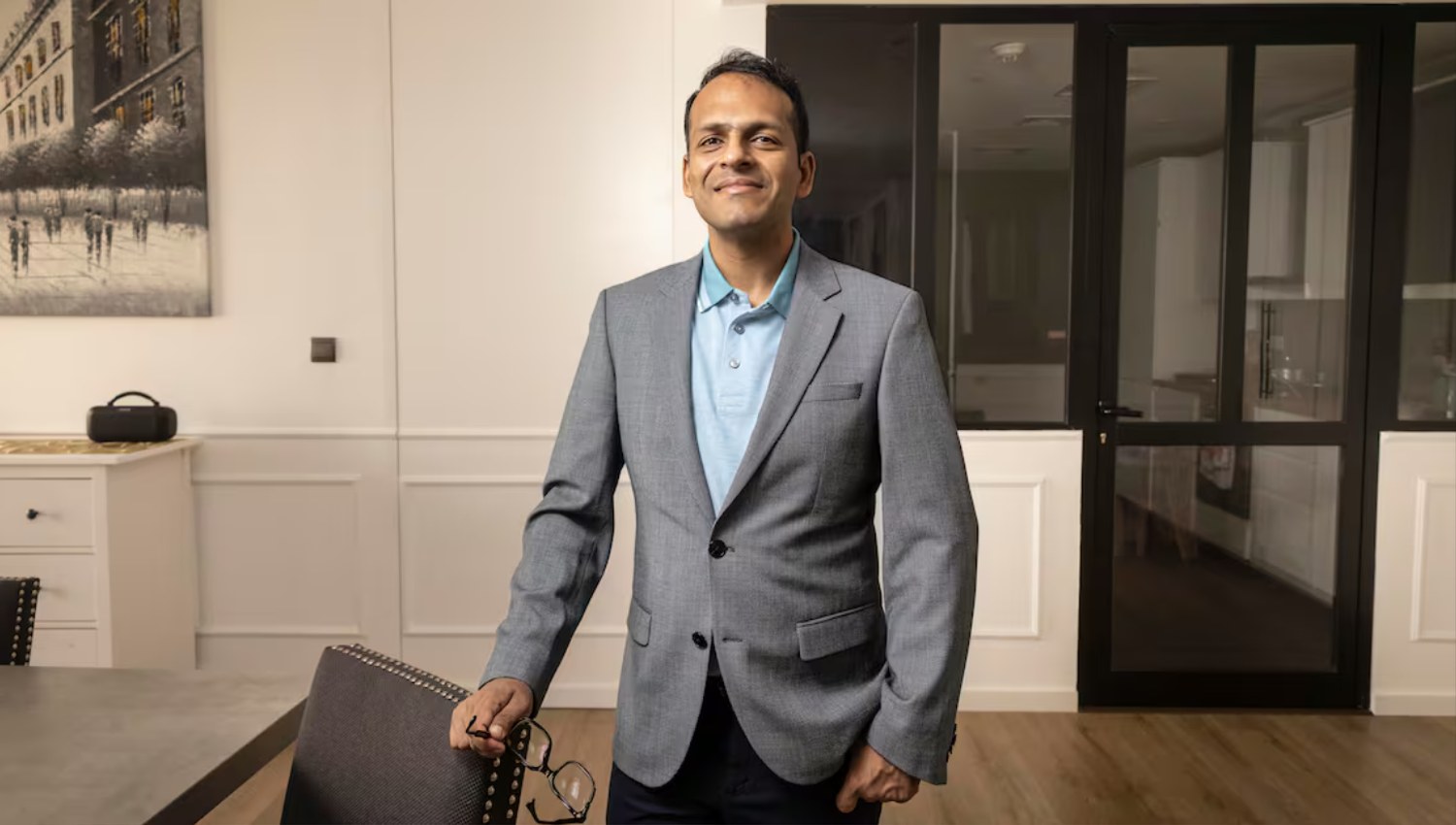

Harsh Garg keeps a full schedule. By day he is vice president of strategy and mergers and acquisitions at Ralliant, a publicly listed industrial technology company based in North Carolina, deciding where to invest capital and how to grow the business. Alongside that, he co-founded Golchi, a travel-bottle start-up that raised more than 400,000 dollars from 5,000 backers on Kickstarter, and he mentors at Founder Mode Bootcamp, a 12-week accelerator that helps teenagers aged 13 to 20 launch and fund companies.
Born in Delhi and trained as a civil engineer at IIT Kanpur, Garg spent 12 years in the United States before relocating to Dubai with his family in December 2024. Today he earns around 2.5 million dirhams, about 680,000 dollars, a year across his corporate salary and a diversified portfolio of US equities, bonds, gold and real estate.
He traces his approach to money to a middle-class upbringing. “My parents instilled a great level of discipline in terms of how you value money, how you use it to unlock convenience, but more than that, how you use it to upgrade yourself, upskill yourself and continuously evolve,” he said. “We never felt that we were squeezed, but we never felt opulent either.” His first job, designing bridges and highways in India, paid close to 500 dollars a month. “At that age, in your early 20s, that meant a lot.”
That early discipline shaped a lasting conviction. “Money will come and go, but the skills you develop, the personality you develop, will stay with you for the rest of your life and will keep unlocking your earning potential,” he said. His corporate income is the household’s most stable cash flow, complemented by investments built both for long-term wealth and near-term income, a safety net that would let him move fully into entrepreneurship if he chose. His best financial bet, he said, has been recurring investment in US equities, which has delivered “a very strong, risk-adjusted return.”
Asked what advice he would give his younger self, Garg offered three lessons. “Money should never be the driver. It should always be an outcome,” he said. “Get really good at something and money will be an obvious outcome.” Second, everyone should try entrepreneurship at least once to make an informed decision about it. And third: “We never know when we might actually have a rainy day, so always save for your worst possible day.” These days, he said, the luxuries that matter most are experiences, especially travel with his family.