
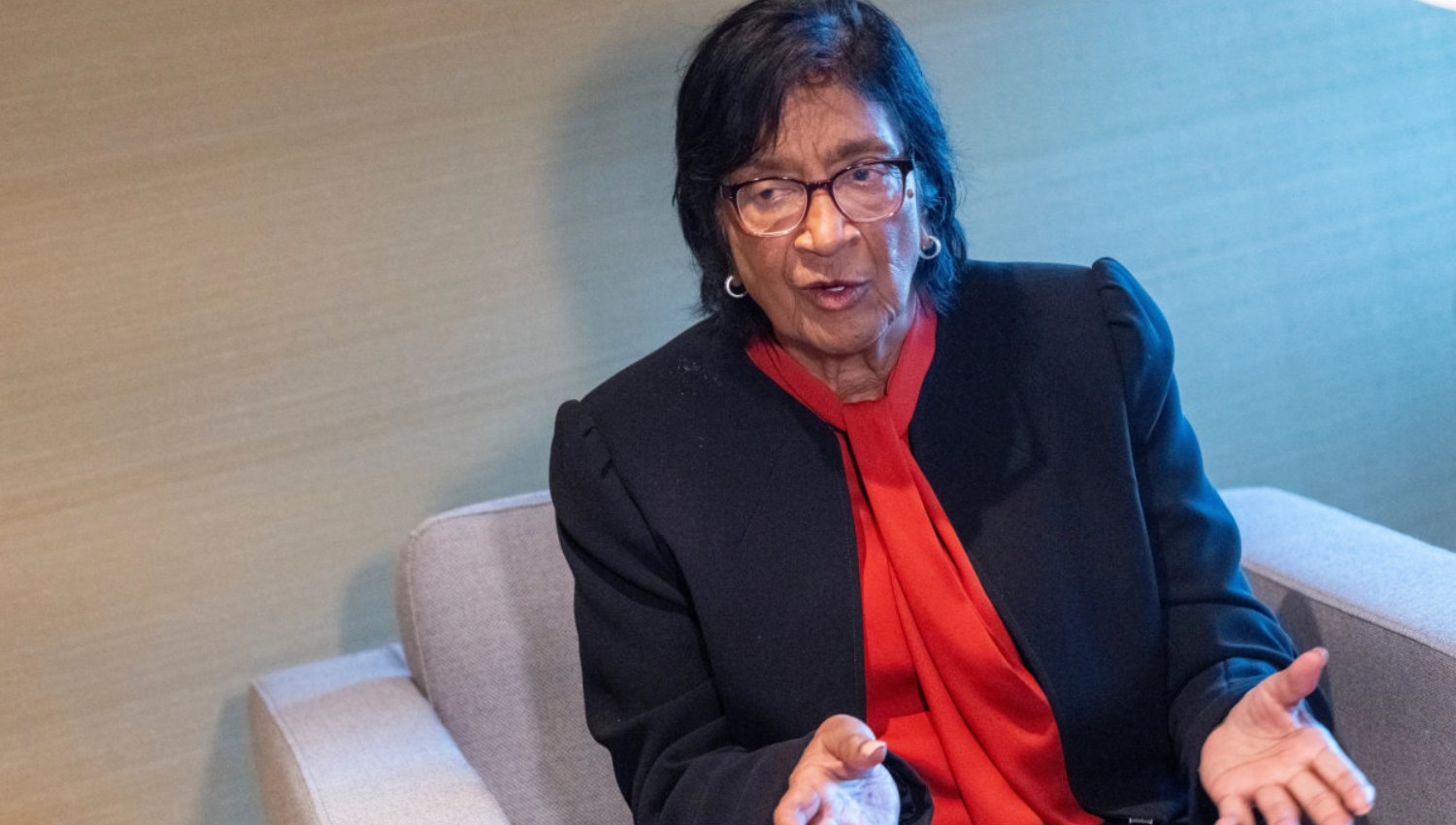

Navi Pillay, the South African-born jurist awarded the 2026 Nobel Peace Prize last week, has called on governments to act together against impunity and to defend the International Criminal Court (ICC). Speaking to the Associated Press in The Hague on Monday, 12 October, the 85-year-old said the rest of the world needs to move beyond statements and take collective action.
Pillay’s career includes defending the rights of Nelson Mandela during his imprisonment, serving as a judge on three international courts and chairing a UN commission on Gaza. That panel concluded last year that Israel was responsible for genocide in Gaza with specific intent to destroy Palestinians, findings rejected by both US President Donald Trump and Israeli Prime Minister Benjamin Netanyahu. She was recognised for promoting international law at a time when the system is under attack. Pillay said that, as a judge, she needed to see evidence before believing she had won, and accepted it only after reading the award letter herself.
This year’s prize coincides with the 125th anniversary of the award. The Norwegian Nobel Committee said the rule of law, at national and international level, underpins the system of peace, and committee chairman Jorgen Watne Frydnes said the choice was meant to remind the world of that, summing up the message as “Peace requires justice”. Hours after the announcement in Oslo, US Secretary of State Marco Rubio announced sweeping new sanctions on the ICC, where Pillay once sat as a judge. She described US attacks on the court as completely unlawful, as well as negative and cruel, and said heads of state carry a particular duty to uphold international law.
Pillay noted that Russia and the United States are not members of the ICC but hold seats on the UN Security Council, where they can block efforts to hold them to account. She said impunity is unpopular everywhere and that the public wants justice. Israel strongly criticised her commission, and she dismissed its response, saying only the US and Israel had objected to the conclusions. Human rights groups and many genocide experts have reached similar findings. The ICC has issued arrest warrants for Netanyahu over alleged war crimes and crimes against humanity in Gaza, allegations Israel strongly denies.
Pillay placed the current difficulties in the context of international law being a fairly recent development for humanity. “Justice is slow, so we must not be impatient,” she said, while urging people to avoid complacency, to look at the world as a judge would, to check the evidence and not to repeat slogans or false propaganda.