

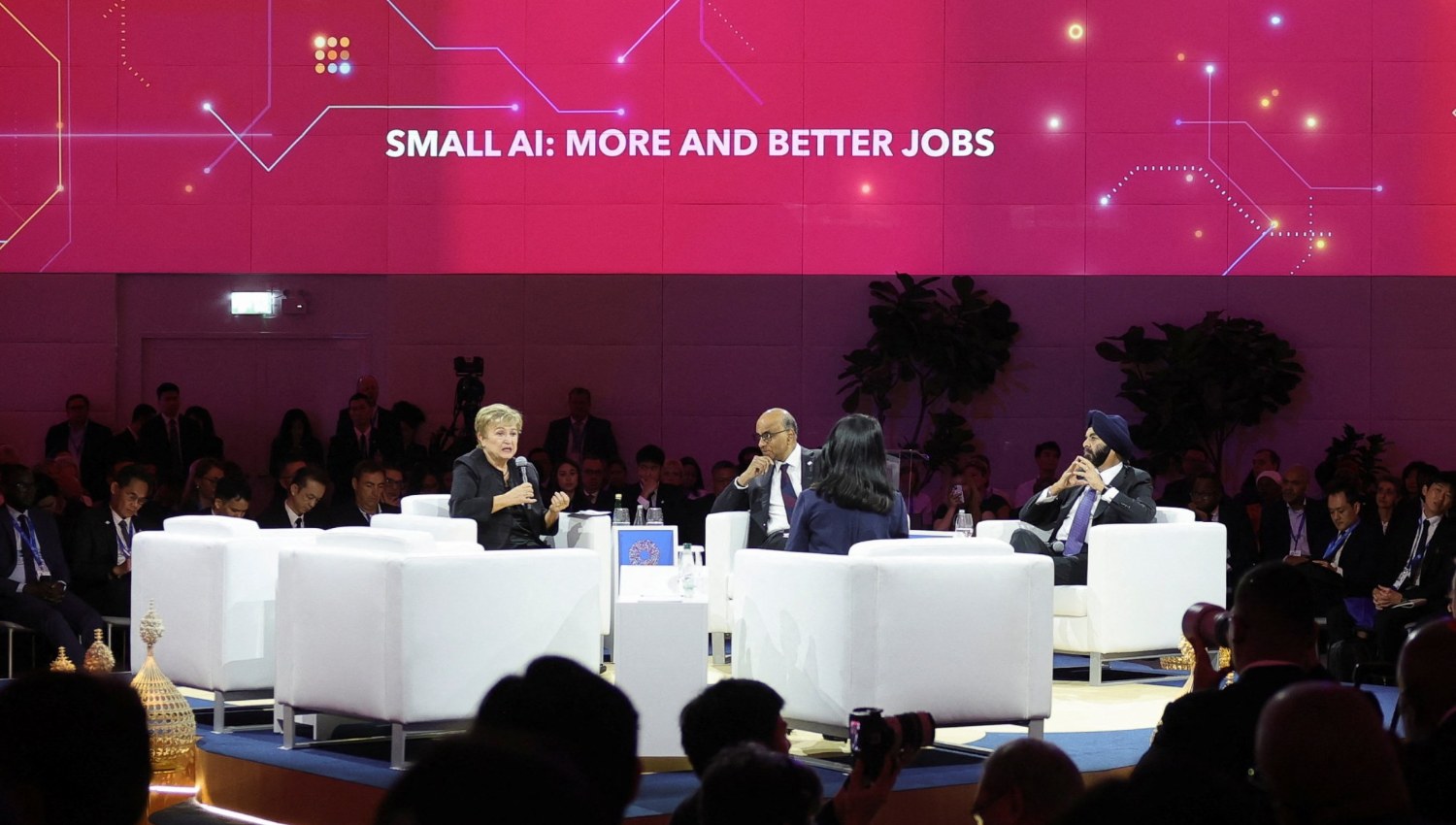

Investment in artificial intelligence infrastructure is keeping world economic growth at about 3 per cent despite an energy supply shock dragging it lower, International Monetary Fund managing director Kristalina Georgieva said on Monday. She was speaking on the opening day of a week of IMF and World Bank meetings in Bangkok, where she said Asian economies that supply AI hardware, such as Thailand, are seeing the largest gains.
Georgieva described the boom as both a demand shock and an investment shock. She estimated it could add between 0.5 and 1 percentage point to growth in advanced Asian economies and between 0.2 and 0.8 percentage point in emerging Asian economies. The IMF projected 3 per cent global growth for 2026 in July and is due to release an updated outlook on Tuesday. Around 18,000 people are expected at the gatherings, including finance officials from the fund’s 191 members, although sources say some ministers, among them US Treasury Secretary Scott Bessent and Spain’s Arcadi Espana, are staying away to deal with matters at home.
The IMF chief also called AI a “slow-moving tsunami” for jobs, education, growth and tax revenue, because income is expected to move from labour towards capital. The fund estimates that AI could eventually augment, downgrade or eliminate 40 per cent of jobs, and an early study found that 10 per cent of US jobs already require AI skills. Routine work is shrinking, while lower-paid roles are growing in construction and data centres. The US, China and India are the most important producers in the AI supply chain, and many of the companies building the infrastructure are based in Asia.
World Bank President Ajay Banga, who has placed jobs at the centre of his presidency, said the bank is concentrating on what he called small AI, which does not rely on large language models. He said such tools could bring large productivity gains to farmers, health systems, teachers and others in emerging markets.
Singapore’s President Tharman Shanmugaratnam, who spoke at the same event, warned that the first rung of the career ladder is seeing weaker demand as AI spreads, hitting graduates looking for their first job. He cautioned against a new divergence in growth and job creation between developing and advanced economies, saying: “AI is going to widen the divergence if we are too passive about it.” Governments, he said, should use the technology to create good jobs on which people can build careers.