
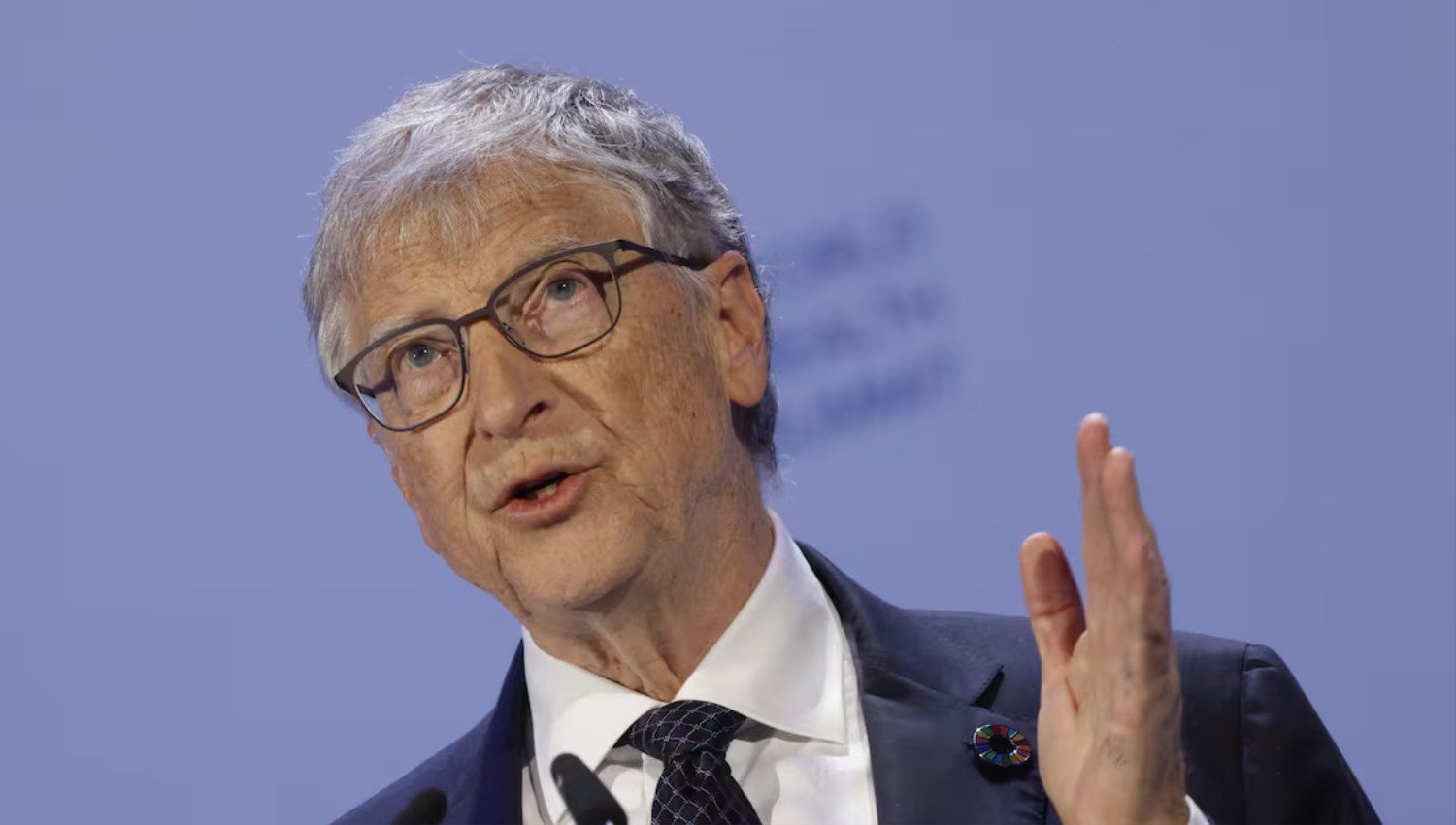

Microsoft founder Bill Gates believes certain jobs should be kept for people even as artificial intelligence rapidly improves in the workplace. In a nearly 6,000-word essay titled “The turbulent AI era is here,” the technology tycoon and philanthropist set out his concerns about what unregulated AI might do to the fabric of society. “As AI and robots improve, we’ll set aside certain things for only people to do,” he wrote. “I’ve started calling this domain Human Reserved, and it’s an example of the kinds of ideas we’ll need to consider.”
Gates said AI could dramatically improve health and scientific research, but argued that governments need an urgent dialogue to prepare for disruption to the jobs market. He even suggested taxing AI to slow the pace at which firms replace workers with machines. Choices, he noted, will differ by country. “Some countries might insist on having humans take care of the elderly,” he wrote, while a nation like Japan, with a shrinking workforce, “may welcome a care-giving robot.”
Much of the anxiety he describes echoes the concerns once aimed at Gates and Microsoft during the personal-computer revolution of the 1980s. “For as long as I can remember, I’ve wished innovation could happen faster. With AI, my feelings are more complicated,” he wrote. “We need time to prepare for the social, political and economic upheaval.” He warned that many jobs could vanish permanently and that, while AI will empower many people, it will also let bad actors do more harm more quickly.
The 70-year-old also reflected on his own upbringing, expressing fears that AI could begin to replace human relationships and stunt the social development of children. He recalled how much work it took, with his mother’s help, to build the social skills he still draws on. Governments, he argued, do not have the luxury of slowing down, and he suggested the United States and China would be wise to set aside their rivalry and cooperate to blunt the potential disruption.
Gates said he plans to press for a serious framework on AI regulation in meetings with legislators in Washington, and to keep the issue central to his philanthropic and business work, from the Gates Foundation to his clean-energy venture Breakthrough Energy. His essay is the latest in a wave of long-form interventions by technology leaders, following a lengthy post by Meta chief executive Mark Zuckerberg. Not everyone is convinced they help. “You’re never going to win an argument by just talking at people,” said Hannah Wong, OpenAI’s former communications director, noting that such manifestos “can fall flat” when executives promise opportunity for all while laying off thousands.