
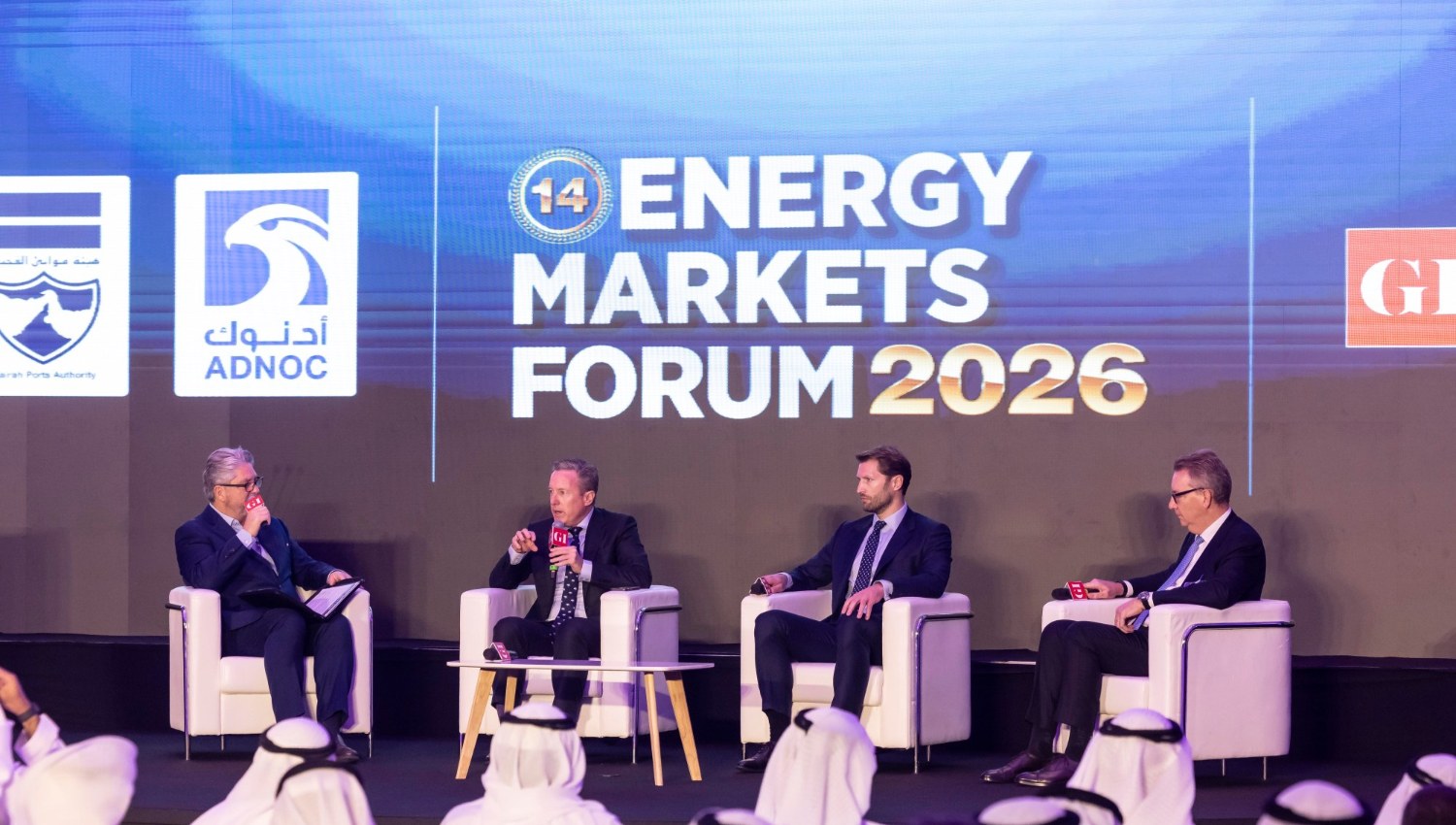

Vitol Group, the world’s largest independent oil trader, says the Iran war has opened large arbitrage opportunities as disrupted trade flows send oil on longer voyages and stretch tanker fleets to their limit. Tom Baker, Vitol’s managing director in Bahrain, made the remarks at an industry forum in Fujairah on Wednesday, telling delegates: “There’s huge arbitrage opportunities going on.”
Baker said the global tanker fleet is now at full utilisation, a point at which shipping becomes very interesting for a trader. Restrictions on the Strait of Hormuz and Bab Al Mandeb have forced ships onto longer routes and increased ship-to-ship transfers, lifting freight rates sharply. Clarksons Research data show average spot earnings for very large crude carriers approached $642,000 a day globally in late September. Vitol has changed where its barrels go as a result, with cargoes from Western and European refineries ending up moving east.
Refining has added to the strain. Around two million barrels a day of capacity has been knocked out in Russia, Baker said, while the Middle East suffered similar outages and Chinese capacity has also fallen. He said the Middle East is now recovering very rapidly. S&P Global Energy forecast last month that refinery runs in the region would average about eight million barrels a day this year, 1.6 million barrels a day below 2025 levels, and the outages have tightened supplies of petrol, diesel and jet fuel.
The disruption is also changing how Vitol leadership judges investments. Baker said the company generally prefers assets that earn money straight away over projects that take years to build. “Today, you can buy a ship and make an immediate return on it,” he said, while a pipeline two or three years from completion has to be weighed against the risk of further black swan events. Some projects, he noted, may be driven by national strategic reasons rather than private return targets, and Vitol has moved from mainly trading third-party barrels to seeing a need to be part of the infrastructure chain.
Baker also described the Middle East and East Africa as an increasingly connected market, with the Gulf’s fuel surplus and short sailing distances making it a natural supplier to countries short of products. During the crisis, Vitol helped landlocked Uganda diversify fuel imports beyond Kenya’s pipeline network by routing supplies through Tanzania’s port of Tanga. Uganda is expected to begin exporting about 230,000 barrels a day of crude through a heated pipeline to Tanga at some point next year, and Baker said those barrels will easily find buyers in Europe, the Middle East or Asia.